
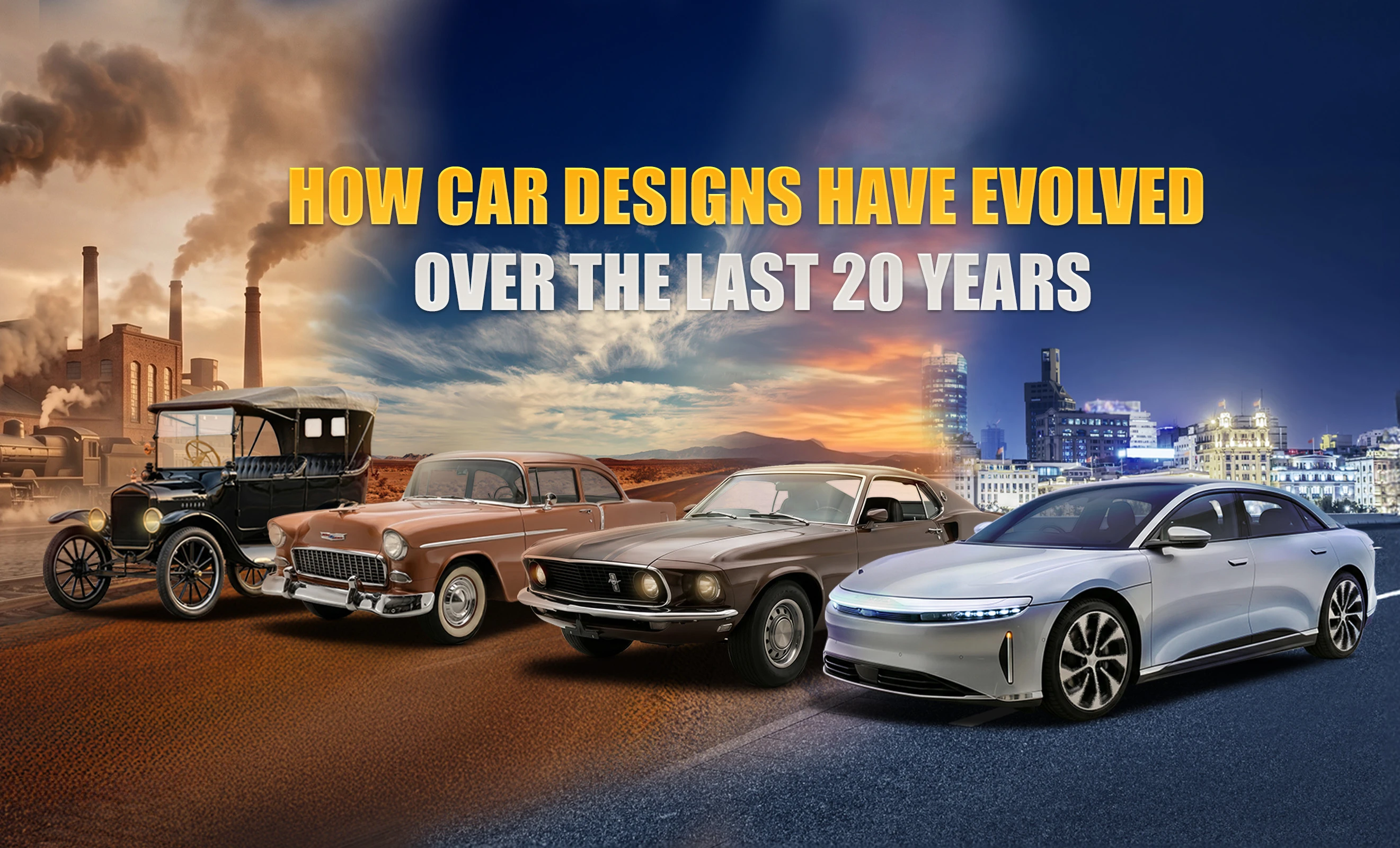
How Car Designs Have Evolved Over the Last 20 Years
Over the past two decades, car design has changed more than many people realize. What used to be mostly about styling—shape, color, and chrome—has gradually become a blend of aerodynamics, safety engineering, digital technology, sustainability, and changing consumer tastes. From the rise of SUVs to the quiet disappearance of some traditional design elements, car exteriors and interiors now reflect the way modern vehicles are built and how people actually use them.
Here’s a clear look at how car designs have evolved from roughly the mid-2000s to today (2026) and what’s driving those changes.
1. From “chrome + curves” to “aerodynamics + sharp character lines”
In the early 2000s, many car designs leaned toward smooth, rounded bodywork with visible details—chrome trim, simple grilles, and softer silhouettes. But as fuel efficiency standards tightened and wind resistance became a major design target, automakers shifted toward more aerodynamic shapes.
What changed:
- Front ends became more sculpted, with character lines that look aggressive but also help airflow.
- Grilles became larger or more intricate, especially in sportier models.
- Body panels became more aerodynamic, with better underbody coverage and reduced drag shapes.
Why it happened:
- Smaller gains in aerodynamics can significantly improve real-world fuel efficiency.
- Brands wanted designs that instantly signal identity from a distance—especially as cars became more similar in mechanical basics.
2. The “SUV takeover”: taller silhouettes reshaped modern design
One of the biggest style shifts since the mid-2000s is the rise of SUVs and crossovers. The demand for higher driving positions and practicality pushed car makers to redesign how vehicles “should look.”
What changed:
- More vehicles adopted a higher stance, long hoods, and upright cabin proportions.
- Wheel arches and cladding (often dark plastic) became common, even on non-off-road models.
- Rear designs started emphasizing space and visual width rather than sleek tapering.
Why it happened:
- SUVs are easier to sell because they offer a perceived “safety” and “space” advantage.
- Consumers increasingly wanted versatile vehicles for mixed city/highway life.
3. Headlights and taillights became “design language”
If you want to see evolution quickly, look at lighting.
In many cars today, the headlamp isn’t just a functional part—it’s part of the brand’s identity. Modern lighting uses LED and increasingly digital/connected elements to create distinct “signatures.”
What changed:
- LED daytime running lights became standard or near-standard.
- Light shapes became more geometric: boomerangs, split elements, and full-width bars.
- Tail lights often gained continuous light patterns across the rear.
Why it happened:
- LEDs allow thinner, more flexible designs.
- Lighting signature helps brands be recognizable even in low light.
4. Interiors shifted from metal knobs to digital cockpits
In the past 20 years, interior design has seen one of the most significant changes. Physical buttons, analog gauges, and simple infotainment screens were common in the early 2000s. Nowadays, a lot of cars look like digital lounges.
What changed:
- Instrument clusters moved toward fully digital screens.
- Infotainment systems became large touchscreen panels, often integrated into one “display wall.”
- Buttons didn’t disappear completely—many makers kept shortcuts—but the overall interface moved to software.
Why it happened:
- Software features can update and evolve over time.
- Brands can create a more premium feel with advanced visuals and animations.
- Digital interfaces also simplify manufacturing in some ways.
5. Design for safety: crumple structure meets styling
In the last 20 years, safety technology expanded rapidly. That changed design decisions in less obvious ways.
What changed:
- Front-end design increasingly accounts for impact zones and energy management, not just looks.
- Rear structures gained attention for collision safety and pedestrian-impact considerations.
- Camera sensors, radar placements, and additional safety hardware influenced bumper and grille shapes.
Why it happened:
- Regulations and safety ratings pushed engineering forward.
- Automakers needed to integrate sensors without compromising the exterior design.
6. The aerodynamics revolution: hidden engineering became visible style
Aerodynamics is the driving force behind a lot of contemporary "cool design." Designers discovered how to blend aesthetics with efficiency.
What changed:
- Active grille shutters (on some models) integrate into front fascia design.
- Flatter surfaces, better airflow channels, and diffusers appear more often.
- Wheels and lower body panels look more engineered for airflow.
Why it happened:
- Especially in hybrids and in fuel-efficient models, aerodynamic gains directly affect range and performance.
- This era popularized the idea that “efficiency can look sporty.”
7. The rise of minimalism—and then the return of bold
There’s been a swing in design taste:
- Many cars moved toward minimal, clean surfaces and fewer “busy” elements.
- But modern styling also brings back boldness through sharper contrast: strong body lines, black trim, and aggressive lighting.
Common modern trends:
- Two-tone colors
- Glossy black accents
- Contrasting roof rails and trim
- “Sport package” styling across mainstream brands
8. Sustainability and EVs: the design shift toward “future shapes”
Electric vehicles accelerated design change, even beyond powertrains. Without a traditional engine, EV makers can rethink the packaging of the front end.
What changed:
- More EVs have closed-off grilles or grille-less front designs.
- The cabin packaging often improves, enabling more interior space.
- EVs frequently adopt smooth shapes optimized for low drag.
Why it happened:
- EV motors and batteries require different layouts.
- Buyers associate EVs with innovation, so design must communicate “new technology.”
9. Material and color trends: from chrome to matte and textured finishes
Over the years, exterior trim choices evolved.
What changed:
- Less chrome overall (depending on brand)
- More matte finishes and protective claddings
- More use of plastics and composites in non-structural trim
- Interior materials shifted toward “soft touch” surfaces and sustainability-focused textiles
Why it happened:
- Regulations and cost/weight targets
- Durability and manufacturing needs
- Brand identity (especially for off-road-inspired designs)
10. The biggest theme: car design now reflects a whole system
In the last 20 years, car design stopped being a “surface-only” art. Today, car styling is tightly connected to:
- aerodynamics and efficiency
- safety systems and sensor placement
- manufacturing constraints
- infotainment and digital user experience
- powertrain packaging (especially EVs)
- consumer preferences (SUV practicality, premium interiors)
Conclusion: Where Car Design Is Heading Next
Looking forward, car design will likely become even more software-driven and experience-centered. We’ll probably see:
- more customizable lighting and digital displays
- more streamlined shapes optimized for efficiency
- interior layouts designed around connectivity and driver/passenger comfort
- greater influence of sustainability—materials, manufacturing, and longevity
Most importantly, the evolution of car designs over the last 20 years shows that aesthetics and engineering are now inseparable. Modern vehicles don’t just look new—they’re built differently, controlled differently, and experienced differently.