
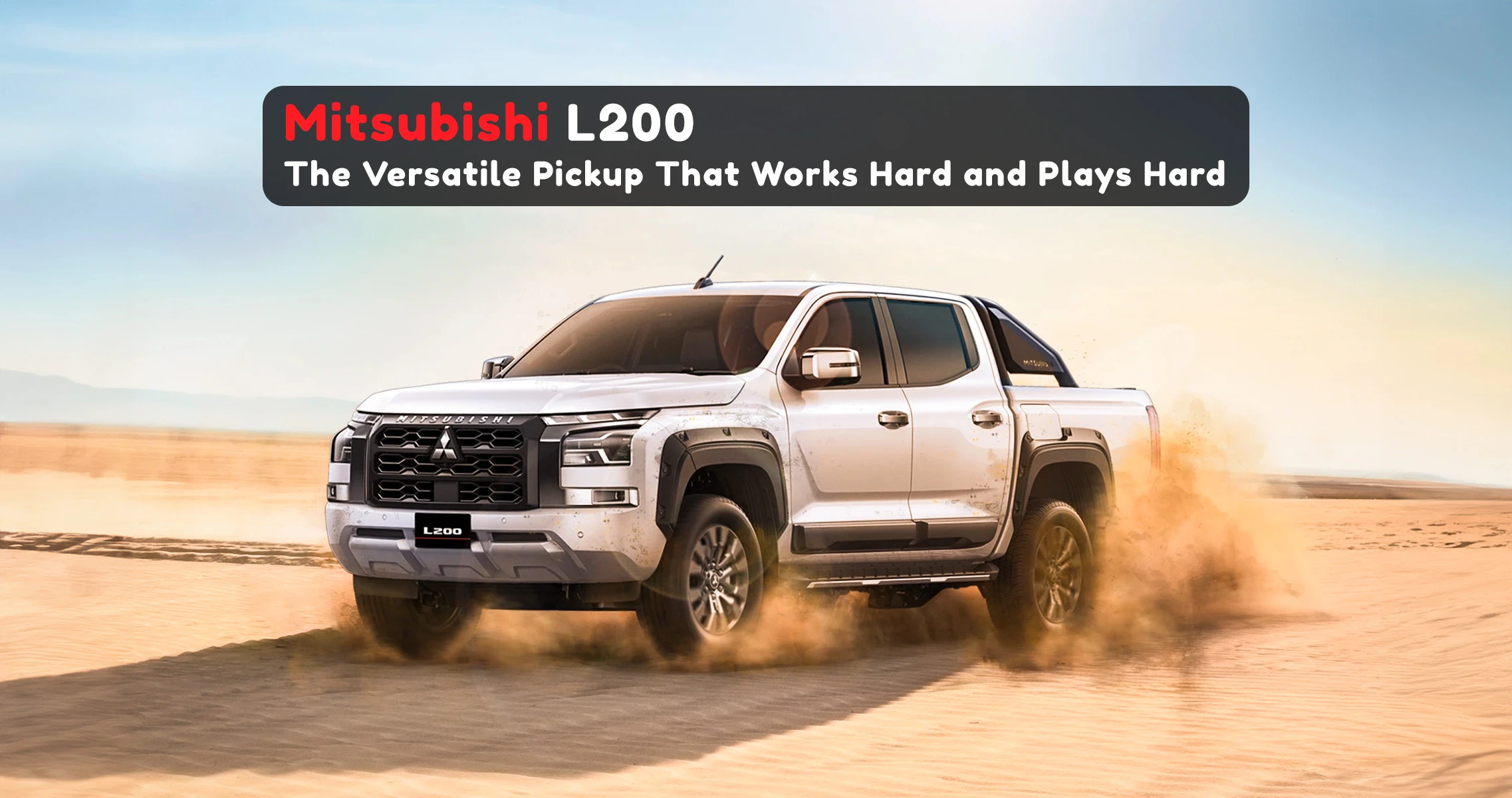
Mitsubishi L200: The Versatile Pickup That Works Hard and Plays Hard
Whether you’re hauling tools to a job or packing the family for a weekend escape, the Mitsubishi L200 is built to switch roles with ease. Reviewers consistently praise its dual personality: a rugged, capable workhorse during the week and a comfortable, family-friendly ride on days off. That versatility means one vehicle — and one set of keys — can handle both heavy-duty tasks and leisure trips.
Is the L200 dependable?
Durability is a top concern for pickup buyers, and the L200 delivers. Recent models use the 2.4-liter 4N15 diesel engine, which relies on a steel timing chain rather than a rubber belt. That design reduces the need for expensive timing replacements if you keep up with routine oil changes to ensure the chain remains well-lubricated.
Durability is a top concern for pickup buyers, and the L200 delivers. Recent models use the 2.4-liter 4N15 diesel engine, which relies on a steel timing chain rather than a rubber belt. That design reduces the need for expensive timing replacements if you keep up with routine oil changes to ensure the chain remains well-lubricated.
Modern diesels have their own service needs. Many late Series 5 and all Series 6 L200s include an AdBlue system to meet Euro 6 emissions standards. AdBlue is essential: if the tank runs dry, the truck can prevent starting to protect its emissions equipment. Keeping a spare 10-liter bottle on hand is a simple precaution to avoid being stranded.
On the chassis side, components like leaf-spring bushes are common wear items for pickups and may announce their condition with squeaks over bumps. These are normal for vehicles regularly carrying heavy loads. With the engine and suspension in good order, the next step is learning to apply power to the road effectively.
Make the most of Super Select 4WD-II
A standout feature of the L200 is the Super Select 4WD-II system, which offers more flexibility than basic or “easy select” systems. Because it includes a center differential, you can use 4WD on dry roads without risking drivetrain damage — a major advantage for stability when towing in mixed conditions.
A standout feature of the L200 is the Super Select 4WD-II system, which offers more flexibility than basic or “easy select” systems. Because it includes a center differential, you can use 4WD on dry roads without risking drivetrain damage — a major advantage for stability when towing in mixed conditions.
The system supports shift-on-the-fly changes, letting you switch from 2H to 4H at speeds up to 62 mph without stopping — handy when transitioning from highway to gravel. To get the best results off-road, use the setting that matches the terrain:
- 2H (2WD High): Best for dry roads and highway cruising; favors fuel efficiency.
- 4H (Full-Time 4WD): Use for towing, wet roads, or mixed surfaces where extra traction is needed.
- 4HLC (Locked Center Differential): For deep snow or loose sand; splits torque evenly between axles.
- 4LLC (Low Range Locked): For very slow, technical crawling, steep inclines, or heavy recovery situations.
Avoid using locked modes on hard pavement — doing so can cause transmission wind-up and long-term damage. In most everyday situations you’ll be fine with 2H or 4H.
Stick to the maintenance plan to avoid expensive repairs
Following the recommended maintenance schedule preserves reliability — and your wallet. A common issue in modern diesel vehicles is DPF (Diesel Particulate Filter) clogging from repeated short urban trips. The DPF needs sustained high-temperature running to regenerate and burn off soot. A regular 20-minute drive at highway speeds each week helps prevent costly DPF failures that can run into the thousands.
Following the recommended maintenance schedule preserves reliability — and your wallet. A common issue in modern diesel vehicles is DPF (Diesel Particulate Filter) clogging from repeated short urban trips. The DPF needs sustained high-temperature running to regenerate and burn off soot. A regular 20-minute drive at highway speeds each week helps prevent costly DPF failures that can run into the thousands.
Monthly visual checks are a good habit: with the engine cold and the truck on level ground, check oil levels, top up washer fluid, and confirm coolant levels. Running consistently low on oil can cause severe engine damage, so topping up as needed is critical.
Mitsubishi advises a full professional inspection every 12,500 miles or 12 months to keep the warranty valid and maintain resale value. Skipping these services may save money short-term but often leads to reduced efficiency and higher repair costs later.
Towing and payload: load wisely
Exceeding weight limits is the fastest route to worn suspension and possible fines. Series 6 L200 models can tow up to 3.5 tonnes, but you must account for Gross Train Weight (GTW) — the total of truck plus trailer. Payload calculations should include passengers, fuel, and any equipment inside the cab: four heavy occupants and a full tank will noticeably reduce how much you can legally carry in the bed.
Exceeding weight limits is the fastest route to worn suspension and possible fines. Series 6 L200 models can tow up to 3.5 tonnes, but you must account for Gross Train Weight (GTW) — the total of truck plus trailer. Payload calculations should include passengers, fuel, and any equipment inside the cab: four heavy occupants and a full tank will noticeably reduce how much you can legally carry in the bed.
Choosing bed protection or accessories also affects payload. Consider the trade-offs before adding heavy gear like canopies:
- Plastic drop-in liners: Affordable, resistant to impact, but can trap moisture or vibrate.
- Spray-on liners: Permanent, high-grip protection that helps prevent rust and maximizes usable space.
- Hard-top canopies: Secure and weatherproof but add significant weight and reduce payload.
A simple routine ties it all together
By combining sensible maintenance with careful use of its versatile drivetrain and respecting weight limits, the L200 will deliver dependable performance for both work and leisure. Small habits — regular highway drives to protect the DPF, monthly fluid checks, and following service intervals — go a long way toward avoiding costly repairs and maintaining resale value.
By combining sensible maintenance with careful use of its versatile drivetrain and respecting weight limits, the L200 will deliver dependable performance for both work and leisure. Small habits — regular highway drives to protect the DPF, monthly fluid checks, and following service intervals — go a long way toward avoiding costly repairs and maintaining resale value.
Conclusion
The Mitsubishi L200 stands out for offering genuine dual-purpose capability: a tough, work-ready pickup during the week and a comfortable, practical vehicle for everyday and family use. Its robust 2.4-liter diesel, user-friendly Super Select 4WD-II system, and sensible engineering choices like a steel timing chain all promote long-term reliability. That reliability, however, depends on sensible ownership: keep up with scheduled servicing, perform routine visual checks, use the correct 4WD settings for the terrain, and respect payload and towing limits. Do that, and the L200 will reward you with years of dependable service — whether you’re hauling heavy loads or heading out for the weekend.
The Mitsubishi L200 stands out for offering genuine dual-purpose capability: a tough, work-ready pickup during the week and a comfortable, practical vehicle for everyday and family use. Its robust 2.4-liter diesel, user-friendly Super Select 4WD-II system, and sensible engineering choices like a steel timing chain all promote long-term reliability. That reliability, however, depends on sensible ownership: keep up with scheduled servicing, perform routine visual checks, use the correct 4WD settings for the terrain, and respect payload and towing limits. Do that, and the L200 will reward you with years of dependable service — whether you’re hauling heavy loads or heading out for the weekend.